
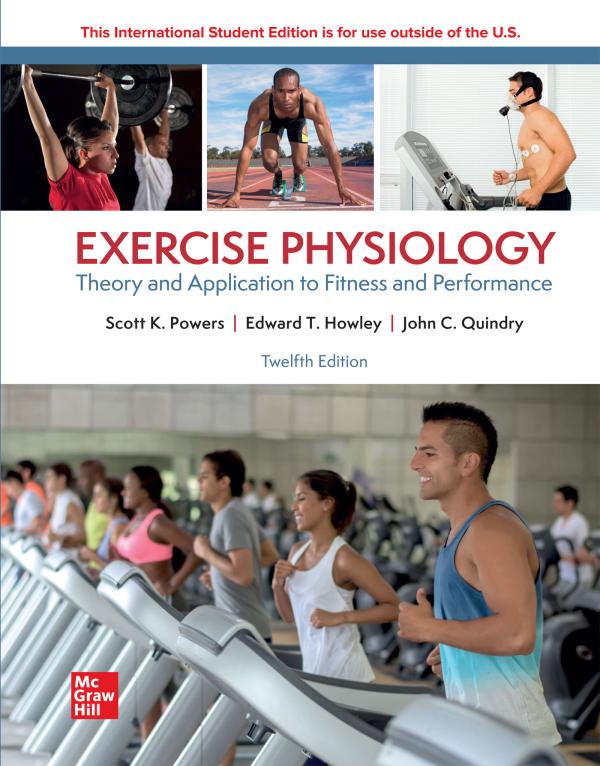
EXERCISE PHYSIOLOGY 12ED
Theory and Application to Fitness and Performance
Scott K. Powers , Edward T. Howley y John C. Quindry
Editorial: McGraw-Hill Higher Education
Edición: 12
Fecha Publicación: 2024
ISBN: 9781266133909
ISBN ebook: 9781266483516
Páginas: 733
Grado: Universitario
Área: Ciencias Sociales y Educación
Sección: Psicología
Idioma: Inglés
 Tweet
Tweet
Edición: 12
Fecha Publicación: 2024
ISBN: 9781266133909
ISBN ebook: 9781266483516
Páginas: 733
Grado: Universitario
Área: Ciencias Sociales y Educación
Sección: Psicología
Idioma: Inglés
Tweet

Preface
Section 1. Physiology of Exercise
0. Introduction to Exercise Physiology
1. Common Measurements in Exercise Physiology
2. Control of the Internal Environment
3. Bioenergetics
4. Exercise Metabolism
5. Cell Signaling and the Hormonal Responses to Exercise
6. Exercise and the Immune System
7. The Nervous System: Structure and Control of Movement
8. Skeletal Muscle: Structure and Function
9. Circulatory Responses to Exercise
10. Respiration during Exercise
11. Acid-Base Balance during Exercise
12. Temperature Regulation
13. The Physiology of Training: Effects of Aerobic and Anaerobic Training
14. The Physiology of Resistance Training
Section 2. Physiology of Health and Fitness
15. Exercise Is Medicine-Part 1: Prevention of Chronic Diseases
16. Exercise Is Medicine-Part 2: Therapy for Chronic Diseases and Prevention of Agerelated Physiological Dysfunction
17. Exercise Is Medicine-Part 3: Exercise Prescriptions for Health and Fitness
18. Nutrition, Body Composition, and Weight Management
Section 3. Physiology of Performance
19. Factors Affecting Performance
20. Training for Performance
21. Training for the Female Athlete, Children, Special Populations, and the Masters Athlete
22. Nutrition, Body Composition, and Performance
23. Exercise and the Environment
24. Ergogenic Aids
Appendix A. Calculation of Oxygen Uptake and Carbon Dioxide Production
Appendix B. Dietary Reference Intakes: Estimated Energy Requirements
Appendix C. Dietary Reference Intakes: Vitamins
Appendix D. Dietary Reterence Intakes. Minerals and Elements.
Appendix E. Percent Fat Estimate for Men: Sum of Triceps, Chest, and Subscapula Skinfolds
Appendix F. Percent Fat Estimate for Women: Sum of Triceps, Abdomen, and Suprailium Skinfolds
Appendix G. MET Equivalents for Exercise,
Activities of Daily Living, and Household Chores
Glossary
*La edición digital no incluye códigos de acceso a material adicional o programas mencionados en el libro.
Exercise Physiology: Theory and Application to Fitness and Performance is designed for students interested in exercise physiology, clinical exercise physiology, human performance, kinesiology/exercise science, physical therapy, and physical education. The text clearly presents the latest understanding of the physiology of exercise through a review of the research and the use of numerous clinical applications. This comprehensive text offers instructors the freedom to select the material that is most important for their courses. The twelfth edition has undergone major revisions with the addition of Dr. John Quindry to the author team, including adding three brand-new chapters focusing on “Exercise is Medicine.”
No hay notas del Autor
Edward T. Howley
No hay notas del Autor
John C. Quindry
No hay notas del Autor
Libros que también te pueden interesar
MÉTODOS DE COMPRA
* Precios con IVA
Busca el término o términos dentro de cada uno de los libros